
Industry 4.0
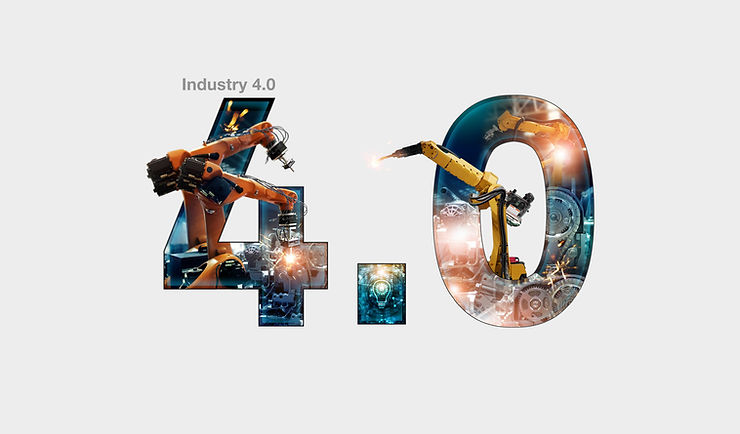
What do the concepts that together form a meaningful whole in Industry 4.0's place in our lives mean? What do they signify? What are they used for? We have compiled them for you.
Industry 4.0 was first mentioned in 2011 as a German experiment. It is referred to as the 4th Industrial Revolution. In its realization phase, concepts such as the internet of things, the internet of services, and cyber-physical systems, vertical and horizontal integration, big data, and cloud technology have played a role in entering our lives.
Key Concepts
Cyber-Physical Systems
These are systems where a physical system is connected to an algorithm operated by a computer, and the system is controlled through that algorithm while data flow is maintained.
Horizontal and Vertical Integration
When talking about horizontal (integration between different sectors with the same customer type) and vertical (integration between different sub-sectors of the same sector) integration, what is important here is that this integration is carried out with the help of a computer algorithm, by collecting and analyzing data.
Internet of Services
Devices and programs that provide digital integration between consumers and various services. For example: Internet banking.
Internet of Things (IoT)
The infrastructure in which a communication network exists between objects and simultaneously between humans and objects.
Big Data
A large data pool where all data obtained from different infrastructures, different technological tools and objects is collected.
History of the Industrial Revolution
Late 1700s: The birth of production machines powered by water and steam energy.
Late 1800s: The birth of machines powered by electrical energy.
1969: The use of electronic technologies in information production and control resulting from physical actions, the emergence of the first PLC.
2010s: Aims to include technology as a partner in our lives and thus make our lives easier.
2017: To produce fully unmanned, robotic technologies. Technology is not a threat, it is a tool.
In the first 3 phases of industrial history, each stage required a development period of approximately 100 years. However, this time is getting shorter as technology advances, decreasing to approximately 40 years between Industry 3.0 and 4.0, and approximately 10 years between 4.0 and 5.0.